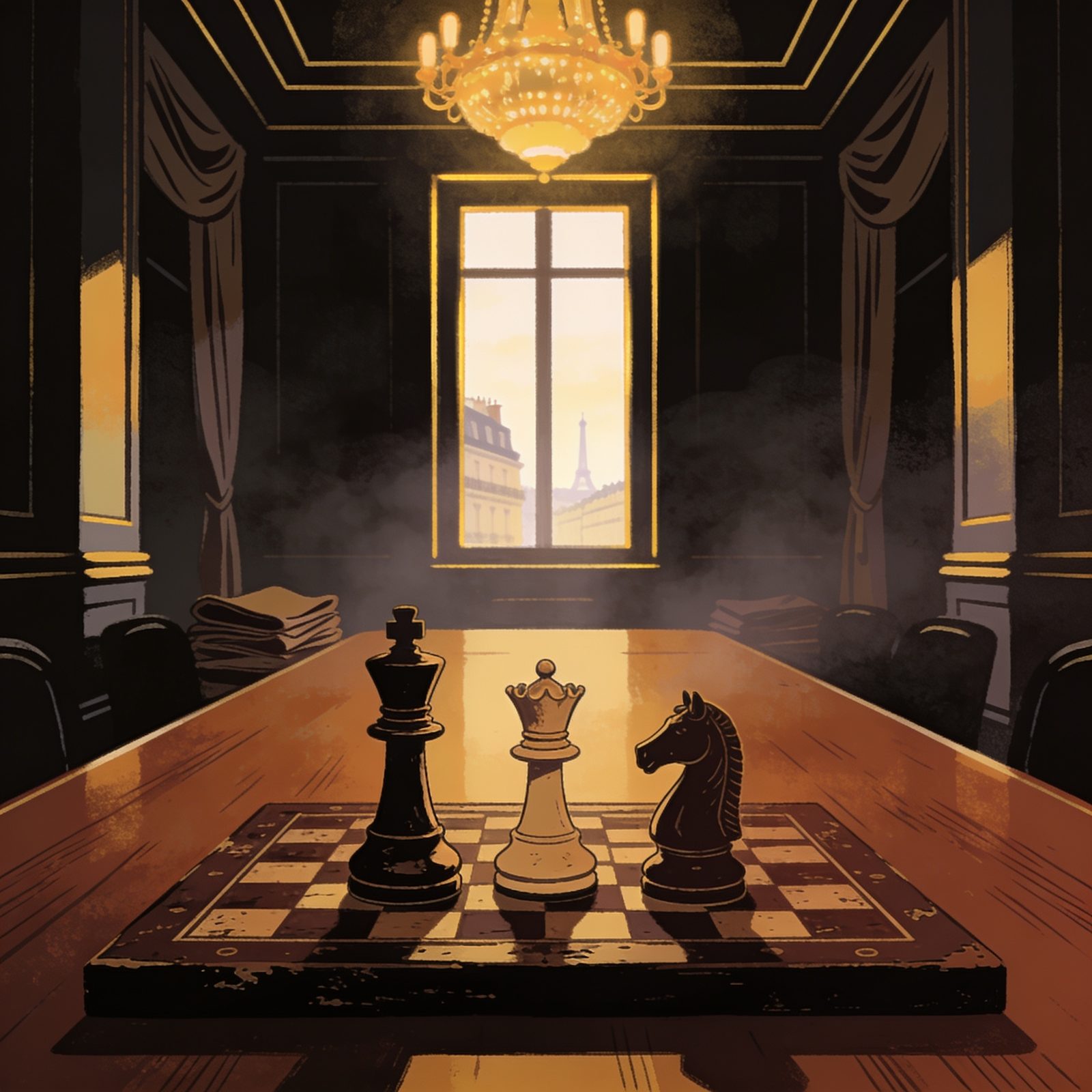
The summer of 1924, and Paris was busy. The city played host to the eighth Summer Olympics, drawing crowds and noise from every direction. In the middle of it, a quieter competition was happening, off to the side of the official Games.
A tournament that slipped in beside the Games
Chess had tried to get into the Olympics. The French Chess Federation campaigned to have the game added to the Olympic program, and the campaign failed. So the federation ran its own tournament anyway, at the Hotel Majestic from 12 to 20 July.
Imagine the room. Fifty-four players from eighteen countries, all of them amateurs. The amateurism rules of the day barred the professionals, which is why the giants of the era did not play — Capablanca, the reigning world champion, stayed away. What the room lacked in established names, it made up for in promise.
The format was its own thing. The players split into preliminary groups, the group winners advanced to a Championship Final, and everyone else dropped into a consolation event. Nobody would call it elegant. Quirky enough, as it turned out, to matter later.
Latvia's Hermanis Matisons took the individual title and was proclaimed "Amateur World Champion." His countryman Fricis Apšenieks finished second, and Edgar Colle of Belgium took third. For the team standings, Czechoslovakia came out on top, ahead of Hungary and Switzerland.
The founding, almost by accident
Then came the part no one could have planned. On the final day, 20 July, fifteen delegates met in the Salle des Fêtes, the town hall of Paris's ninth arrondissement. They signed the act founding the Fédération Internationale des Échecs — FIDE, the International Chess Federation. Dr. Alexander Rueb of the Netherlands became its first president, and they adopted a motto that chess players still use today: "Gens una sumus." We are one family.
Two details make that room feel small in the best way. The tournament director is often described as Alexander Alekhine, not yet world champion then, just a Russian émigré living in Paris. And a young Dutch player named Max Euwe took part for the Netherlands. Decades later, in 1970, Euwe became president of the very federation founded in that town hall, holding the post until 1978. The future president played at the event that created his office.
So why is this remembered as unofficial? Because FIDE was born in parallel to the tournament, not over it. The federation did not organize the Paris event, and the format was, frankly, strange. The official Olympiad series begins three years later, in London in 1927. Paris 1924 is generally counted as the first Chess Olympiad — the unofficial one, the dry run that happened to give the game its governing body.
Sit with that for a moment. A failed Olympic bid, a tournament arranged on the margins, fifty-four amateurs who could not have known they were building the institution that would organize world chess for the next century. They came to play a game. They left with a federation.